Not A Cat

It crawled out of a hole in the base of an old live oak stump and sat atop as if it owned the world.

The small, striking creature had a round face, with large cupped ears and a gorgeous, banded tail.

It was an animal I had heard of and now at age 18, was seeing in a remote creek bottom in Menard County, TX.

Kasey Johnson found this ringtail in a deer blind near Spring Branch, TX.

It was a ringtail cat.

Well, that’s the name I had always heard-“ringtail cat” with the emphasis on “cat”.

My studies on this charming animal however, told me it was not a cat at all.

According to Texas Parks & Wildlife Department (TPWD) officials, the ringtail is a cat-sized carnivore that is kin to raccoons, not felids. Its bushy tail is flattened and nearly as long as the head and body, with alternating black and white rings.

These are highly nocturnal animals that conduct most of their business in the middle of the night. My sighting however was about an hour before dark and since I was positioned in a ground blind, it never knew I was there.

The ringtail sat there for 30 minutes or so and then crawled down and disappeared into the brush.

Ringtails are associated with the Texas Hill Country and Trans Pecos and according to TPWD are distributed statewide. My high school art teacher who is a brilliant wildlife artist told me of seeing one in Pinehurst in Orange County around the time I was in school in the 90s.

I also have reports from a trapper who claims to have caught one in Sour Lake and a camper who reported seeing one near Sam Rayburn reservoir.

The International Union on the Conservation of Nature shows them present through the state, but I have never seen one or even a game camera photo of one in Southeast Texas where I live.

The IUCN ringtail range map.

Until now.

On the Jan. 29 edition of my radio program “Moore Outdoors” I spoke about ringtails and mentioned these obscure sighting references.

A listener emailed me and said I should contact TPWD-licensed wildlife rehabber Pam Jordan.

She was in possession of a ringtail brought to her by a TPWD game warden that was caught in a live trap by a resident of Bridge City, near the shore of Texas’ northenmost bay Sabine Lake.

The mysterious Southeast Texas ringtail caught in a live trap is a large specimen.

Was this a ringtail brought from someone who hunts or perhaps owns land in the Texas Hill Country? It very well could be.

I have solicited wildlife reports, photographs and trail camera evidence for decades in the region and only have the above accounts with no hard proof.

Could it be a native remnant of a small, hidden population?

TPWD, IUCN and researchers at Texas Tech University show evidence it could be. The below map from Texas Tech’s Natural Science Research Laboratory shows a verified sighting in Jefferson County.

No one will ever know the origin but this mystery give us a great opportunity to learn of a beautiful, unique resident of Texas. Jordan said this animal will be released into a safe, undisclosed location and said people should not take animals from the wild home with them. Such incidents causes problems for the animal and often the people who caught them.

Jordan does an incredible job rehabilitating a variety of animals and you can help support her mission by clicking here.

She noted that ringtails were brought into caves by miners who had no conflict with them as they worked during the day when ringtails sleep. At night however they would awaken and prey on the rodents in the mines.

Since that sighting in my youth I have only spotted two other ringtails and both of them were in Menard County during the same timeframe. And I have spent a vast amount of time in ringtail country.

I was blessed to have had the opportunity to see the one Jordan is caring for at her facility.

A ringtail may not be a cat but they’re very bit as fascinating and mysterious as any of the wild cats that inhabit Texas. Seeing one today reminded me there are always surprises in the wild.

And some of them are downright beautiful.

Chester Moore

You can subscribe to this blog by entering your email address at the subscribe prompt at the top right of this page. You can contact Chester Moore by emailing chester@chestermoore.com. Subscribe to the podcast by visiting thehighercalling.podbean.com.

TPWD and NWTF Turkey Release Inspires

Wild turkeys are fast on their feet and often flee from danger by running instead of taking to the air.

They can however fly quite fast and as each box opened on a private tract of land in Titus County, TX, the flying ability of the wild turkey was on display.

Marked with the logo of the National Wild Turkey Federation (NWTF), these six boxes held six Eastern turkey hens captured in Missouri and transported to Texas Parks & Wildlife Department (TPWD) officials at the Dallas-Forth Worth Airport.

Annie Farrell of NWTF releases one of the Eastern turkeys at the Titus County location.

Working together on restoring the Eastern turkey to East Texas, TPWD and NWTF have forged a powerful partnership that saw hope for this subspecies in the region literally taking flight.

According to TPWD Turkey Program Director Jason Hardin, there are now about 10,000 Eastern turkeys in the region thanks to stocking birds from partner states like Missouri and enhanced management on public and private lands.

One of the six hens flying into her new habitat. (Photo by Chester Moore)

It’s a brilliant conservation program and one that has inspired turkey hunters and private landowners to do more to manage forests for turkeys.

This particular turkey release, however, inspired another group of people.

Higher Calling Wildlife’s mothership is the Wild Wishes program that grants wildlife encounters to children with a critical illness or loss of a parent or sibling. To date, the outreach has granted 115 wishes and is working on many more.

“We filmed the release with our smartphones and put together a virtual turkey release for one of our wish families. They have been basically shut-in since COVID started because of health issues with children, so we wanted to do something special for them. We knew they would love seeing the turkeys released, and TPWD and NWTF officials have been very gracious in allowing us to have our kids participate in these releases,” said Lisa Moore, director of the Wild Wishes program.

Emily Odom, 16 of Graham, TX, got to participate in a release in 2020 on the same property and said it was one of our her life highlights.

Emily Odom was inspired by her 2020 turkey release experience.

“I’ve been in the Wild Wishes program since I was nine, and it changed my life so much for the better. Getting to open that box and watching those turkeys fly out was so freeing and inspiring for someone like myself who has had some challenges. I loved it,” she said.

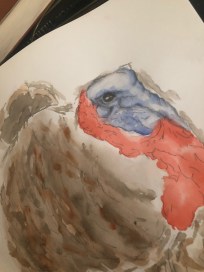
It inspired her so much in fact she went home and did some wild turkey artwork and has begun a program to raise awareness of wildlife conservation through artwork.

“That turkey release helped inspire that. I’m so grateful to the Moore’s for taking me into the Wild Wishes program years ago and for NWTF and TPWD for letting me be part of a release,” she said.

Emily’s first artwork of her conservation project. She sent this pic over to us to show us her progress just a week after the 2020 turkey release.

As Emily said, there is something special about seeing those turkeys fly out of the boxes into an area that needs a population boost. East Texas by the early 1980s was essentially devoid of wild turkeys, but thanks to TPWD and NWTF, there is a growing population.

That’s inspirational for turkey hunters, wildlife lovers and a very special group of kids who have been able to take part in person and virtually.

Chester Moore

You can subscribe to this blog by entering your email address at the subscribe prompt at the top right of this page. You can contact Chester Moore by emailing chester@chestermoore.com. Subscribe to the podcast by visiting thehighercalling.podbean.com.

Social Distancing Can Save Wild Sheep

“Social-distancing” is a term most hope disappears from the lexicon soon. While the concept of keeping a safe distance during the COVID-19 pandemic is wisdom, losing the connection to others is challenging for humanity. For wild sheep, social-distancing is essential.

Domestic sheep and goats can transmit a pathogen that is a setup for pneumonia and other aliments to bighorn and thinhorn sheep that is devastating to herds. It is so devastating that more than two million that existed at the time of Lewis & Clark’s expedition declined to around 25,000 by the early 1900s.

“Wildlife agencies and conservation groups have done a remarkable job of bringing them back to around the 150-175,000 range, but there is still a major problem with exposure to domestic sheep. Die-offs are occurring in pockets right now in states like Oregon and Utah,” said Chester Moore, an award-winning wildlife journalist and founder of Higher Calling Wildlife.

Photo by Chester Moore

Higher Calling Wildlife seeks to raise awareness of mountain and forest wildlife conservation. It also mentors young people dealing with critical illness and traumatic loss to use media for conservation purposes.

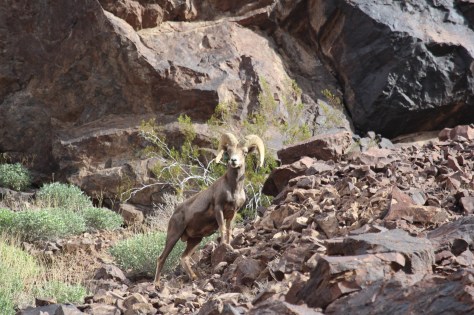
One of those young people is Reannah Hollaway, who, through the program and the generosity of the Texas Parks & Wildlife Department, got to take part in a desert bighorn capture and relocation in 2019.

“I have cystic fibrosis, which affects the lungs, and have had to take special precautions during COVID-19. This gives me a unique understanding of the need for keeping wild sheep and domestic sheep apart. This kind of social-distancing can save bighorns,” she said.

Reannah Hollaway helps put a tracking collar on a desert bighorn at Elephant Mountain Wildlife Management Area courtesy of the Texas Parks & Wildlife Department and Higher Calling Wildlife.

Hollaway is a student at Texas Tech and studying to work in the field of wildlife management.

She chose this degree after a wildlife encounter through Higher Calling Wildlife’s mothership, Wild Wishes. This outreach grants wildlife encounters to young people with a critical illness or the loss of a parent or sibling.

To raise awareness of the need for sheep social distancing, Higher Calling WIldlife has begun the Sheep Scrapbook project, which seeks photos taken of wild sheep throughout North America.

Anyone who submits a wild sheep photo to chester@chestermoore.com gets a Sheep Scrapbook Project collector’s coin and a Higher Calling Wildlife decal. Pictures are posted in a gallery at highercallingwildlife.com.

“It’s our way to get people of all backgrounds to think about wild sheep, and the response has been tremendous,” Moore said.

“We’re hoping that when people focus their cameras on sheep, whether in one of our national parks or a hunting or fishing expedition, they can take time to realize these animals are facing a real problem with pneumonia. It’s time all of us who love wild sheep do more to support organizations and agencies searching for ways to keep wild sheep social-distanced from their domestic cousins.”

“Sheep Week” Set The Bar HIgh

As the Wild Sheep Foundation’s (WSF) virtual “Sheep Week: The Experience” ends, I am in awe.

Having just watched an Arizona desert bighorn tag sell for $315,000, many other record tag bids and a week that took digital conservation communication to a new level, hope is alive and well.

That hope is that despite incredible setbacks due to COVID-19 that purpose and innovation can serve as a model for how future challenges can be met in a digital platform.

Everyone, myself included, hopes there will be an in-person “Sheep Show” in Reno, NV next year but if the pandemic continues, WSF officials have proven something impactful can still happen.

While total fundraising results were not available at the time of this writing, it should be anywhere between $4-5 million for the purpose of putting and keep wild sheep on the mountain.

And that of course is extremely important but there’s something else here.

And that is connection.

Among the numerous Zoom meetings, seminars, chat rooms and a very interactive vendor’s expo hall, sheep and mountain hunters from around the world were able to do business, get educated and make friends.

Officials with the Texas Parks & Wildlife Department capture and move sheep at Elephant Mountain Wildlife Management Area. Translocations are at the hart of sheep recovery. (Photo by Chester Moore)

As a wildlife journalist, I spent much of my time communicating with state and regional biologists and various WSF chapters and state sheep conservation groups.

With the desire to bring the latest in sheep coverage here and via our other media platforms it was great to connect with the people on the ground doing the work and getting the inside story of what’s happneing with wild sheep in North America.

While we humans are battling a pandemic, wild sheep have been contending with one since domestic sheep were brought out West in the 1800s. Pneumonia that is minimally impactful to domestic sheep is devastating to wild sheep and has had an impact at some level everywhere from Canada to Mexico.

Lambs like this Rocky Mountain bighorn lamb from New Mexico are especially susceptible to pneumonia. In fact, once a mother it exposed, most lambs don’t make this long. This is a six month-old lamb. (Photo by Chester Moore)

Conservationists like those involved with WSF and in the state, tribal, and provincial wildlife agencies have taken up the cause. Through population transplants, habitat and domestic sheep grazing management have brought the numbers up to about six-fold from their all-time low of 25,000.

But the problems that impacted sheep in the 1800s are still there and without conservation efforts of sheep hunters there would be little hope for these truly majestic animals.

It will be exciting to see the fundraising tally that will help so many states and provinces manage their wild sheep.

But in my opinion, an equally powerful victory was keeping the mountain hunting community connected and expanding the reach of WSF’s vision.

Sheep and mountain hunters sometimes crave time alone in the outdoors but need to stay connected to other like-minded individuals. (Photo by Demi Schlageter)

For the first time, the organization has topped 10,000 members, showing that “Sheep Week” was an experience that many found appealing.

That’s a very good thing because many challenges lie ahead for our beloved rams, ewes, and lambs.

“Sheep Week” shined the bright light of hope on them and set the proverbial bar for digital conservation interaction far above the tree line-into sheep country.

Chester Moore

You can subscribe to this blog by entering your email address at the subscribe prompt at the top right of this page. You can contact Chester Moore by emailing chester@chestermoore.com. Subscribe to the podcast by visiting thehighercalling.podbean.com.

Wild Sheep Pandemic Spreads

Pneumonia has spread into the Northeast Oregon bighorn sheep herd.

Oregon Department of Fish and Wildlife (ODFW) and the Confederated Tribes of the Umatilla Indian Reservation (CTUIR) have determined that the same strain of bacterial pneumonia that caused a die-off in the Lookout Mountain bighorn sheep herd in early 2020 has spread to the Burnt River herd.

The author photographed this bighorn at 12,000 feet in an area where grazing is restricted but these sheep don’t stay here all the time. Moving into grazing areas is highly dangerous. (Photo by Chester Moore, Jr.)

ODFW officials reported this is the first-time bacterial pneumonia (caused by the organism Mycoplasma ovipneumoniae) has been identified in the Burnt River herd. 

While I-84 normally separates the herds, bighorn sheep have been known to try to cross the highway. The Lookout Mountain herd ranges north of I-84 and west of Brownlee Reservoir, about 10 miles from the Burnt River Canyon herd, which is south of I-84.

Most concerning of all is that all lambs in the Lookout Mountain herd have died although adult mortality has tapered off.

This latest spread of pneumonia in wild sheep which is caused by exposure to domestic sheep is why I believe the least covered wildilfe tragedy (at the national level) in America is this pandemic.

Exposure to domestic sheep can be deadly for wild sheep as they can transmit a pathogen that can end up being deadly.

And it is a pandemic-at least at the level of existing in the United States, Canada and Mexico.

It is what killed nearly two million wild sheep in the 1800s and continues today. Domestic sheep transmit a pathogen that is a setup for pneumonia and other aliments for wild sheep.

Local news coverage and hunting-based conservation groups are the only ones to touch this topic. When is the last time you saw something about this on a major wildlife television network?

Since wild sheep are managed by many different state, provincial and tribal agencies, few are aware of the myriad outbreaks of pneumonia happening right now.

Even in the Internet age, it can be challenging to know what’s happening in the Yukon for example when you live in Texas.

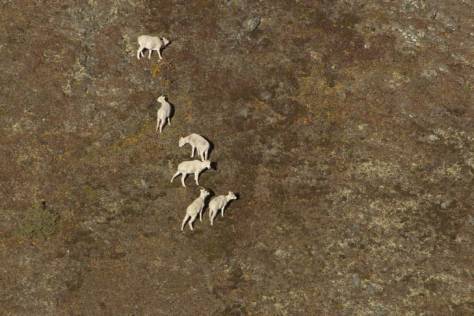
Alaska’s Dall sheep population has long been seen as bulletproof so to speak due to vast contiguous habitat and strict management.

In 2018 officials however, found bacterial pneumonia in four Dall sheep within a sample of 136 and in two of 39 mountain goats.

Dall sheep have been found with deadly pathogens in Alaska. Although most are in remote areas some do come into contact with domestic sheep.

“The Dall sheep testing positive for M. ovi were all in Game Management Unit 13A; all were taken by hunters and appeared healthy. The mountain goats were live captured and released in Southeast and on the Kenai Peninsula and showed no sign of illness; only samples from goats on the Kenai tested positive,” according to officials with the Alaska Department of Fish and Game.

“Our initial research has confirmed M. ovi in a small number of Dall sheep and mountain goats in relatively isolated areas of the state,” said Division of Wildlife Conservation Director Bruce Dale.

There have been no reported die-offs but the finding is concerning, especially when you look at what has happened recently in Oregon.

We will continue coverage of the sheep pandemic and also show recovery efforts that have taken sheep numbers far above where they were by their all-time low early in the 20th century.

It’s an important issue and in our corner of the world it will remain at the top of the priority list.

Chester Moore

You can subscribe to this blog by entering your email address at the subscribe prompt at the top right of this page. You can contact Chester Moore by emailing chester@chestermoore.com. Subscribe to the podcast by visiting thehighercalling.podbean.com.

Florida New Year’s Bear Serves As Reminder

Niceville, Fla, located on Florida’s “Emerald Coast” in the Panhandle (Gulf side) is not known as a great bear viewing destination.

But on Jan. 3, a neighborhood there got a special treat seeing a hefty black bear having its choice of tasty food in the garbage.

I would have been pumped!

Seeing bears is a fairly rare experience for most of us and I would have certainly been out there with my camera at a cautious distance, but then immediately do what I could to make sure it didn’t happen again.

That means not feeding pets outside, certainly not purposely leaving food for these animals and perhaps figuring out a way to go bear proof with the garbage cans.

There’s an old saying in wildlife management that a “fed bear is a dead bear”.

What that means is bears fed around people get to comfortable and often have to be taken out. That might not sound fair but it’s the way it is.

And as much as we invest in bear awareness here, it’s better to remove a bear than have one kill a child.

It happens.

People get way too comfortable around black bears. They assume because they are not grizzlies, that they are safe.

And while black bears are not as aggressive…lets says on the average, they do attack people. And in fact, most black bear attacks are predatory.

While a grizzly might whack you around because it doesn’t like you in its habitat, most fatal black attacks are predatory. That’s why every fish and game department in bear country recommends fighting back against a black bear attack.

And those in grizzly country, recommend playing dead for grizzlies. Grizzlies might just chew on you. Almost all black bear attacks are of the predatory kind.

As these animals expand in places like Florida and my native Texas people need to be aware of this and give the bears their distance and respect. You shouldn’t be terrified if you see one but also shouldn’t treat it as you would a whitetail doe sighting.

Niceville, Fla.-not exactly Yellowstone in terms of wildness.

Bears coming back is a good thing. It represents a conservation victory but the public needs to understand they are wild animals, not cartoons.

Like, I said I would have shot photo of this one too but with my 400 mm lens from a vehicle, not a cell phone at charging range. Just sayin.

These carnivores make places wilder and in this case, it added some wildness to a nice, suburban neighorhood.

Considering how crazy things are in the world right, a bear showing up in the bushes outside of my bedroom would be a welcome relief.

I would just make sure my response would be best for my family and the bear.

Chester Moore

You can subscribe to this blog by entering your email address at the subscribe prompt at the top right of this page. You can contact Chester Moore by emailing chester@chestermoore.com. Subscribe to the podcast by visiting thehighercalling.podbean.com.
Sheep Week Is A Worthy Investment

“Sheep Week” is coming Jan. 11-16.

The Wild Sheep Foundation’s (WSF) annual “Sheep Show” in Reno, NV was cancelled due to COVID-19 like every other sporting expo this winter.

So, instead of throwing in the towel, they came up with what should be the most extensive and unique online wildlife event ever and they’re calling it “The Experience”.

For $50, attendees get access to a week’s worth of live seminars, giveaways, auctions and film premieres along with cutting-edge web-based interaction with vendors from the mountain hunting and conservation community.

Plus, the bulk of this will be archived and accessible for attendees into February.

I was fortunate to attend my first “Sheep Show” last year and was looking forward to the 2021 edition. As a wildlife journalist with a deep interest in wild sheep, I was blown away by the quality of the event, the funds WSF raised for conservation and the generosity of the people involved.

The author checking out a cool Dall sheep mount at the Sheep Show in Reno, NV last year.

I’m signed up and ready for next week and recommend anyone interested in getting involved with wild sheep conservation do the same. The funds will benefit WSF’s goal of “Putting and Keeping Wild Sheep On the Mountain” and that alone makes it a worthy investment.

Wild sheep conservation awareness is a cornerstone of what we do here at Higher Calling Wildlife and we are excited to see what “Sheep Week” brings to the table.

You can learn more and sign up at www.sheepweek.org.

Wild sheep are special creatures that need more help and attention than any other game animals in America, chiefly due to disastrous interactions with domestic sheep that carry a pathogen absolutely fatal to their wild cousins.

Photo by Chester Moore

If you’d like to get involved helping the cause, give “Sheep Week” a try and consider joining The Wild Sheep Foundation.

I have no delusions that I will ever be able to afford to hunt a bighorn or thinhorn, unless I win an auction or drawing. But I have a profound love of these animals for their God-given beauty and majesty unparalleled in North American wildlife.

Sheep conservation is not just for the well-to-do. It’s for anyone who wants to step up to the plate and help. “Sheep Week” is a great starting point.

Chester Moore

You can subscribe to this blog by entering your email address at the subscribe prompt at the top right of this page. You can contact Chester Moore by emailing chester@chestermoore.com. Subscribe to the podcast by visiting thehighercalling.podbean.com.

Fighting The Good Fight

“It was the best of times, it was the worst of times…”

That quote from Charles Dickens “A Tale of Two Cities” reflects how I feel about 2020 on a personal level as well as simply being a human on Planet Earth at this very moment.

COVID-19’s impact on our world has been nothing short of historic and there is more to come. I wish I could give a prediction of a quick deliverance from this pestilence along with its human and economic cost but I would be lying.

Early into the pandemic, I explained how it would impact wildlife with everything from poaching running rampant in Africa where science-based, legal hunting and ecotourism were shut down to important wildlife surveys in America being cancelled.

Public Domain Photo

All of that has happened and we will continue our coverage on that topic in 2021.

The business that I work in, the hunting/fishing/wildlife media industry has been ravaged by COVID-19’s economic impact. I’m putting my trust in God for finances going into a new year because things are not looking bright otherwise.

And I knew this would happen the moment I read the word “pandemic” in a World Health Organization Report.

That inspired action.

I don’t do what I do professionally for the great money, because I could make more elsewhere. I don’t do it for the accolades, nor for the fringe benefits of wildlife recreation access although that at times has been abundant.

I do it because I believe in it. Wildlife has been a passion of mine since childhood. A couple of years back my mother found a report from my fourth grade where I said I wanted to be someone who helps endangered wildlife when I grew up.

This is in me.

And it is why me and my wife Lisa founded Higher Calling Wildlife this year. I needed something that could function under a business model of low cost and high effectiveness.

By using investigative journalism and cutting-edge educational strategies, the mission of Higher Calling Wildlife is to raise awareness to mountain and forest wildlife conservation and stream fisheries. It’s free to join (and you can do that by clicking here) and it involves young people.

Me and my wife Lisa have a ministry called Kingdom Zoo Wildlife Center and its offshoot the Wild Wishes program. Wild Wishes grants wildlife encounters to children with a critical illness or loss of a parent or sibling. To date we’ve granted 112 wishes ranging from encounters with wolves to giraffes and special days at our small zoological facility.

Teens from the Wild Wishes program who have an interest in conservation are mentored in media and have an opportunity to contribute to the conservation cause through our Higher Calling magazine, e-newsletter and other media platforms.

In our first year, we have put out two of these e-magazines, Issue 1 and our Wildlife of Israel special edition and started our Sheep Scrapbook Project that raises awareness to wild sheep dying of parasite/disease risks from domestic sheep. We are giving out collector’s coins for those who submit photos they have taken of wild sheep in North America.

We posted on four Facebook pages related to hunting and parks and had such a great response we ran out of coins! The second bunch should arrive this week.

There were also some other positives from this year.

My “New Life For New Mexico’s Bighorns” article that was posted here won 1st place in the Texas Outdoor Writer’s Association Excellence In Craft awards for the blog category. We also took 1st in the independent blog category for the Press Club of Southeast Texas along with receiving a total of 13 awards for writing, radio and photography in both media competitions.

Our Turkey Revolution project entered its second year with unprecedented media coverage in publications ranging from Texas Fish & Game to Hunter’s Horn. This year’s goal of photographing an elusive eastern turkey in East Texas happened in April and was documented here.

Eastern gobblers photographed in Newton County, TX.

Here at the end of of 2020, put my faith in Christ, my focus on prayer and hard work and moving forward with the best of my abilities.

I challenge all of you to find a way you can contribute in 2021. There will be opportunities to help spread the word about our projects you will see here and through our e-newsletter and Higher Calling magazine if you join for free.

I also challenge you to spend more time outdoors.

There is healing of soul in the mountains, forests and waterways of our world. There is no bad news where eagles soar, trout swim and turkeys gobble.

I have been doing this locally, spending time fishing in a stream near my home and some private ponds at a friend’s property. It has allowed me to clear my head when the news of the day has been frustrating.

I have gotten back into flyfishing this year and have challenged myself to catch a five-pound bass on fly gear. I haven’t hit that mark yet but did get my best flyfishing bass ever-a four pounder.

The author with his best-ever bass caught on fly gear caught Dec. 2020.

Talk about fun!

And that’s something we will continue to cover here. Yes, we will have true news as it relates to wildlife but it will be balanced with fun challenges and interesting stories that hopefully inspire as well as educate.

Henry David Thoreau wrote that, “In wildness is the preservation of the world.”

I don’t know about the world, but it certain helps preserve my enthusiasm for life.

Stay safe. Stay healthy and venture beyond the pavement into the wild. Great things can still happen there.

Chester Moore

You can subscribe to this blog by entering your email address at the subscribe prompt at the top right of this page. You can contact Chester Moore by emailing chester@chestermoore.com. Subscribe to the podcast by visiting thehighercalling.podbean.com.
Bingo The Christmas Dingo (Video)

Christmas is a special time of year around the world and it has always been very important for the Moore family.

It has taken on an even more significant meaning since me and my wife Lisa founded the Kingdom Zoo Wildlife Center® and the Wild Wishes® program to bring the love of Christ to hurting children through wildlife encounters.

When you see kids in such despair, understanding the gift of Christ coming into the world, inspires us to want to give everything we can to bring His hope into their lives.

In 2018, I wrote a children’s storybook called “Bingo the Christmas Dingo” that tells a heartwarming story of Santa Claus adopting an orphaned dingo puppy he found in the Outback of Australia.

It’s a tale of adoption and wildlife conservation.

Now , each Christmas we do readings of the book to various facilities where we work with kids in the foster system as our gift to them.

My friend Brandon Swarers turned the story into an animated storybook sort of like the vintage videos we grew up with.

This is our gift to the kids and kids at heart out there this Christmas and we hope you enjoy it.

Chester Moore

Kingdom Zoo Wildlife Center® was founded by Chester and Lisa Moore in 2012. The facility, located in Pinehurst, TX, is not open to the public but is only accessible to children facing various struggles from being in the foster system, to abuse, critical illness and special needs. All encounters for these children is free. The Wild Wishes® program grants wildlife encounters to children with a critical illness or loss of a parent or sibling. You can donate at kingdomzoo.com or wildwishes.org. All donations are tax-deductible.

You can subscribe to this blog by entering your email address at the subscribe prompt at the top right of this page. You can contact Chester Moore by emailing chester@chestermoore.com. Subscribe to the podcast by visiting thehighercalling.podbean.com.

An African Marsh Buck In TX

Sightings of antelopes are not uncommon in Texas.

The blackbuck antelope of India is a common resident of exotic game ranches and they are fairly common free-ranging outside of high fences in the Texas Hill Country,

In fact, I recently photographed some near Kerrville.

African antelopes are rarer but kudu, lechwe and several gazelle species are found on some ranches.

Sitatunga (marsh buck) are a central African forest antelope that are extremely rare even on the many large, high fence game ranches I have been on over the years. In fact, I have never seen one.

Photo by Chester Moore

That’s why getting a Facebook message that one was hanging out around a residence just outside of Beaumont got me excited. My friend took a couple of photos with her cell phone at her residence and a relative did the research to determine it was indeed a sitatunga. I have kept her anonymous because the sighting was literally behind her house.

I set a Moultrie Mobile cam on the property and within a few hours got a photo of the beautiful antelope. The camera has been there for over a month and it never returned.

According to the Smithsonian National Zoo, sitatunga reside in the swamps, savannas, forests and forest clearings of central, eastern and parts of southern Africa, ranging from Cameroon and Central African Republic in the north to northern Botswana in the south.

It is theorized that sitatunga likely occurred alongside waterways throughout western and central Africa as well, but are no longer found in that region.

Hunting ranches in Texas have created a a thriving industry that produces large number of animals. Animals like the scimitar-horned oryy, blackbuck antelope and axis deer have been sent back to their native lands where they were endangered from these ranches.

A sitatunga hunt would demand anywhere from $10-12,000 according to sources I reached out to so this animal was either from a hunting ranch, a breeder or perhaps someone who enjoys keeping beautiful exotic hoofstock.

An official with the Jefferson County Sheriff’s Department said the animal was sighted six miles away two weeks before I got my game camera photo.

And a few days ago, I got this photo from reader Ben Broussard that was taken three weeks after mine and about eight miles away. Either it’s the same animal or there were multiple escapees. I’m betting on it being the same animal. Again, sitatunga are not a common exotic in Texas.

Ben Broussard submitted this game camera photo of what I assume is the same sitatunga around eight miles from the location of my photo.

I have reached out to several exotic owners in Southeast Texas to see if they had an escapee or if they knew anyone who did. Everyone was shocked there was a sitatunga in the area-whether it was behind a fence or free-ranging now.

I have written numerous times in recent years that animal enocunters in the United States have changed dramatically because of the introduction of exotics.

This sitatunga situation was an interesting surprise. It likely simply got out of a hole in a fence or escaped during the two major hurricanes that hit Southeast Texas in 2020.

I hope it makes its way back home but likely it will continue wandering.

Interestingly, this antelope known as a “marsh buck” in Africa is probably better suited for survival in our swampy habitat than most exotics.

Chester Moore

You can subscribe to this blog by entering your email address at the subscribe prompt at the top right of this page. You can contact Chester Moore by emailing chester@chestermoore.com. Subscribe to the podcast by visiting thehighercalling.podbean.com.