A Look at The Horse Killings In TX, Florida and Louisiana

A mysterious cluster of horse killings has hit Southeast Texas, specifically in the areas of Pearland (just south of Houston) and in Liberty County.

Some horses are shot and left to lay while others are walked out of their fences, stabbed and have their meat taken.

Who is doing this? Is there a pattern?

Maybe someone out there has a tip for law enforcement.

Click to listen to Chester’s podcast on this bizarre situation.

As someone who respects these animals for their beauty and what they do for back-country hunters, campers and fishermen, this is heartbreaking.

Is this linked to the horse killings in Florida and Louisiana? Something very strange is going on and we are trying to find answers.

Listen as I discusses on the Higher Calling podcast.

Chester Moore

You can subscribe to this blog by entering your email address at the subscribe prompt at the top right of this page. You can contact Chester Moore by emailing chester@chestermoore.com. Subscribe to the podcast by visiting thehighercalling.podbean.com.

A mysterious cluster of horse killings has hit Southeast Texas, specifically in the areas of Pearland (just south of Houston) and in Liberty Coun

A mysterious cluster of horse killings has hit Southeast Texas, specifically in the areas of Pearland (just south of Houston) and in Liberty County.

Some horses are shot and left to lay while others are walked out of their fences, stabbed and have their meat taken.

Who is doing this? Is there a pattern?

Maybe someone out there has a tip for law enforcement.

As someone who respects these animals for their beauty and what they do for back-country hunters, campers and fishermen, this is heartbreaking.

A mysterious cluster of horse killings has hit Southeast Texas, specifically in the areas of Pearland (just south of Houston) and in Liberty County.

Some horses are shot and left to lay while others are walked out of their fences, stabbed and have their meat taken.

Who is doing this? Is there a pattern?

Is this linked to the horse killings in Florida and Louisiana? Something very strange is going on.

A Tribute To Fallen Sheep Conservationists

While conducting aerial surveys for desert bighorn sheep in West Texas on Saturday, Aug. 8, three Texas Parks and Wildlife Department (TPWD) employees died in a helicopter crash on TPWD’s Black Gap Wildlife Management Area in Brewster County.

TPWD reported the victims include Wildlife Biologist Dewey Stockbridge, Fish and Wildlife Technician Brandon White, and State Wildlife Veterinarian Dr. Bob Dittmar.

Photo by Chester Moore.

The pilot, a private contractor, survived the crash and was transported to El Paso for further treatment.

“No words can begin to express the depth of sadness we feel for the loss of our colleagues in this tragic accident,” said Carter Smith, TPWD Executive Director.

“These men were consummate professionals, deeply liked and highly regarded by their peers and partners alike for the immense passion, dedication, and expertise they brought to their important work in wildlife management and veterinary medicine.  Wildlife conservation in Texas lost three of its finest as they so honorably and dutifully carried out their calling to help survey, monitor and protect the bighorns of their beloved west Texas mountains.  We will miss Dewey, Brandon, and Dr. Bob deeply and dearly.  All of us at the Texas Parks and Wildlife Department send our deepest condolences and sympathies to the Stockbridge, White, and Dittmar families in the wake of this devastating tragedy and continue to pray for the health and recovery of the pilot.”

In a heartfelt statement on the tragedy, the Texas Bighorn Society released the following statement.

We are deeply saddened after hearing about the tragic and unexpected loss of Wildlife Biologist Dewey Stockbridge, State Wildlife Veterinarian Dr. Bob Dittmar, and Fish and Wildlife Technician Brandon White on Saturday in the Brewster County helicopter accident.  These three respected Texas Parks and Wildlife employees have dedicated their life to desert bighorn and wildlife conservation.  Their commitment and expertise have given us the knowledge we need to succeed in restoring desert bighorn sheep in Texas.  We will always be grateful to these men for their hard work and sacrifice, and we give our sincerest condolences to their families. 

Make no mistake these three men were conservationists in the truest sense of the word. Wild sheep require a higher level of management than any other game species in North America and what they did for these great animals will help ensure viable populations in the future.

Of the three, I only briefly knew Stockbridge who was knowledgable, generous and passionate about the topic of sheep conservation and all wildlife management, especially at Elephant Mountain WMA which he oversaw.

Photo by Chester Moore.

Wild sheep are special animals and the people who work toward their conservation are special people. These men and women work in some of the most inhospitable environments in America and put in countless hours in extreme heat, extreme cold and at extreme elevations.

They are worthy of our respect and in this tragic case, worthy of memorial as an example of deeply committed conservationists.

Our prayers here at Higher Calling Wildlife are with their families, co-workers and the extended family of wildlife conservationists in the Trans-Pecos of Texas and beyond who were impacted by their dedication.

These men helped Texas’ rarest and most regal game animal, the desert bighorn sheep reclaim and sustain habitat lost during much of the 20th century.

Their death saddens us but the actions of their very dedicated lives should serve as inspiration.

Chester Moore

You can subscribe to this blog by entering your email address at the subscribe prompt at the top right of this page. You can contact Chester Moore by emailing chester@chestermoore.com. Subscribe to the podcast by visiting thehighercalling.podbean.com.

The Bear And The BBQ Of EStes Park, Co

Last Tuesday, me and my friends Todd and Annie Jurasek spent a full day exploring the mountains in Rocky Mountain National Park, near Estes Park, Co.

We had built up quite the hunger, so before heading back to the lodge, we went to a barbecue restaurant we enjoyed the day before.

But at 8:30 it was closed.

We decided to pick up some fast food on the way back, so I pulled out of the parking lot and drove off.

Less than 200 yards away, I looked to the left and couldn’t believe my eyes.

The bear at Estes Park, Co. (Photo by Chester Moore)

A large black bear was sitting on top of a rock about 75 yards away.

“That’s just a statue,” Todd said as I ran out of our SUV with my camera.

“Maybe so, but I have to see,” I replied.

As I focused my camera, I was not sure if I had missed some sort of elaborate statue all of the times I had previously passed by this spot or was looking at an actual bear.

After all, it was dark and it was only lit by street lights from down the road.

As I adjusted my camera settings, the bear moved it’s head and I knew I was looking at something special.

Todd and Annie quickly joined me and we were astonished this large bear was sort of chilling on a rock on the side of the road in the neighborhood. Todd has just prayed for us to have a bear encounter and the Lord responded quickly.

2020 is our “Summer of the Bear”.

He hung out for another minute or so and then lumbered off the rock into the darkness.

Interesting Colorado Parks & Wildlife Department (CPWD) officials made this post this post on Thursday.

Tuesday a bear was seen walking near downtown Estes midday, around 12:30pm. Local LE officers were able to haze the bear away from downtown and it went up a tree near the Birch Ruins.

Wildlife Officer Rylands arrived on scene to assess the situation and help make sure people were not approaching the bear. Rylands asked the bear if it could please remain up in the tree and take a nap until nightfall when there would be less people and cars moving about. Thankfully the bear heeded his request and made itself comfortable on the branch.

CPWD officials posted a photo of the bear in a tree and it’s hard to tell if it’s the same one we saw the same day.

Either way it shows bears on highly adaptable animals and will move into area of human habitations.

If you encounter bears in these settings or in the woods, be careful not to approach or spook them and never feed bears. Obey all bear safety guidelines in parks and respect the fact these beautiful animals are potentially dangerous.

Summer 2020 is the “Summer of the Bear” here at Higher Calling Wildlife and this encounter was a personal highlight for me.

I love black bears and I love Estes Park, Co.

Amazing place.

Amazing animals.

Chester Moore

You can subscribe to this blog by entering your email address at the subscribe prompt at the top right of this page. You can contact Chester Moore by emailing chester@chestermoore.com. Subscribe to the podcast by visiting thehighercalling.podbean.com.

Higher Calling 2020

There is nothing more majestic than a bighorn ram navigating its mountain domain where the air is thin and the scenery stunning.

As me and my wife Lisa photographed a gorgeous Rocky Mountain bighorn ram enjoying a natural mineral lick at 12,000 feet in Colorado, another ram appeared.

The author photographed this bighorn at 12,000 feet in an area where grazing is restricted but these sheep don’t stay here all the time. Moving into grazing areas is highly dangerous. This is the same described in the introduction standing over a mineral lick (Photo by Chester Moore)

Popping its head up over what looked like a sheer cliff from our angle, the younger ram carefully made it’s away toward the lick, cautiously approaching the older and larger animal.

I thanked God for the moment because I knew it was He that put me and Lisa on this path.

Six months earlier the Holy Spirit whispered the words “Higher Calling” into my spirit and put me on a trajectory that led me on a path of deeper purpose and of elevated expectations.

As COVID-19 continues to shake the world and people debate everything from wearing masks to rioting, there is no doubt times are confusing.

In his letter to the church in Phillip, the Apostle Paul wrote, “I press toward the mark for the prize of the high calling of God in Christ Jesus.”

And that’s what seeing the great animals of the high country reminds me of-God, His Creation and divine purpose.

The author glassing for wild sheep with a new pair of Meopta binoculars near Estes Park, Co. (Photo by Lisa Moore)

There was a reason these rams had a mineral lick in their alpine habitat and they instinctively knew they needed it.

When the universe was flung into Creation, those purposes were built into the Earth and the sheep and here we were witnessing it.

There is something pure about mountain air and special about the creatures that thrive in these environments.

Wild sheep don’t always live in the highest altitudes though. They will move down into valleys and fields to feed. And when they do, they are often in grave danger.

There has been a pandemic of sorts ongoing with wild sheep in North America since the 1800s when domestic sheep entered their landscape. Carrying bacterial pneumonia, they transfer it to their wild cousins and the results have been catastrophic.

From two million wild sheep on the continent when Lewis and Clark set out on their expedition to 25,000 or so in 1900 it was brutal.

Hunter-conservationists and concenred fish and game agencies stepped in and through translocation and careful management have brought numbers up to around 175,000 but the threat still exists. And wild sheep still die when the co-mingle with domestics.

Maybe there’a s lesson here for us.

Co-mingling with those infected can only bring trouble.

The coronavirus is one aspect but I am talking about all of the infection of the hateful, vicious fighting over issues that will only truly be settled when the Lord returns. I am talking about the abandonment of honor for fellow humans.

At 12,000 fee that day there were no political debates, election ads, controversies of social issues or division thereof.

It was just me, my wife, what ended up being three Rocky Mountain bighorn rams and a tangible sense of God’s presence.

If I had not heeded the words “Higher Calling”, we would not have experienced this and many things in my life would be different.

This blog would not even exist.

There is something to this whole “Higher Calling” thing and that is for each of us to discover and I believe those who purpose it in their hearts will do so in 2020.

And I am soon heading back to the mountains to do just that.

Chester Moore

You can subscribe to this blog by entering your email address at the subscribe prompt at the top right of this page. You can contact Chester Moore by emailing chester@chestermoore.com. Subscribe to the podcast by visiting thehighercalling.podbean.com.

Paddington Bear: Endangered And OVERLOOKED

Author Michael Bond impacted several generations with his iconic “Paddington Bear” series.

Featuring a spectacled bear from South America, a species known little outside of its indigenous range, the books and animated features have done more to raise the profile of the species than anything.

They are the only South American bear species and are named for the light pattern on their face, neck and chest that in some individual resembles spectacles or eyeglasses.

A spectacled bear. (Public Domain Photo)

According to the Wildlife Conservation Network, little is known about this elusive bear and while the mystery surrounding them may add to its mystique, it does little to further its conservation.

Lack of knowledge about these bears considerably compromises the conservation management for the species.

This rare, charismatic bear is highly endangered, primarily due to habitat fragmentation that has caused bears to lose access to critical feeding areas. Although this bear is generally found in humid, alpine cloud forests, Spectacled Bear Conservation (SBC) discovered a population of more than 65 bears in the low elevation dry forest, providing a unique opportunity to observe these bears in the wild.

SBC says spectacled bears are a vulnerable species seriously threatened by habitat loss, habitat fragmentation and human-wildlife conflict.

The lack of knowledge about spectacled bears in the wild impacts our ability to make conservation decisions or plans. Spectacled bears are the only bear species in South America with potentially as few as 2,500 mature individuals remaining. 

I have reached out to some researchers to get some in-depth information on the species we will hopefully be able to post soon. Until then, enjoy this introduction to the beautiful, enigmatic and endangered spectacled bear.

Chester Moore

Donate to help spectacled bears through Spectacled Bear Conservation by clicking here.

We donated $50 in honor of our daughter Faith wanting to champion bear conservation. And hopefully this little donation will inspire others who read this to donate. (Chester and Lisa Moore).

You can subscribe to this blog by entering your email address at the subscribe prompt at the top right of this page. You can contact Chester Moore by emailing chester@chestermoore.com. Subscribe to the podcast by visiting thehighercalling.podbean.com.

Rhinos Of The Forest Pt. 3

Rhinoceros are not just animals of savannah and desert as we established in the first two installments of this series (Pt. 1, Pt. 2).

These great animals inhabit moist forest and even highland areas in Africa and in Asia, most of the remnant rhino populations are in dense forest or mountainous areas.

Indian rhinos. (Photo Creative Commons License/Bernard Dupont)

African rhinos get a fair amount of mainstream wildlife coverage but their cousins in Asia get almost none which was a big inspiration for me to do this series.

The Javan and Sumatran rhinos are as on the edge of extinction as any animal on the planet, but not everything in Asia is bad.

In fact, in India, there has been quite a turnaround in the population of Indian or one-horned rhinos according to officials with the World Wildlife Fund.

Both range countries, India and Nepal, have been very successful in expanding greater one-horned rhino numbers from around 200 individuals at the turn of the 20th century to a total of around 3,500 today.

Vigorous anti-poaching patrols and successful translocations from one area to another has brought the species back from the brink of extinction.

Wardens monitoring a white rhino in Kenya. (Public Domain Photo)

In Africa, rhino farming has been extremely successful in South Africa and hunter-based iniatives including “green hunting” where rhinos are darted and sperm is collected to artifiically insimiate rhinos in other areas have proven successful especially for white rhinos.

But the situation is very serious out there on the poaching end. The Asian demand has not ceased. Here are a few standouts to show how much effort it takes to keep rhinos in existence.

*Zoo Poaching: A rhino was poached for its horns at a zoo in France in 2016. “Rhino poaching has historically targeted wild populations,” said Dr. Susie Ellis, Executive Director of the International Rhino Foundation in a 2016 news release.

“This is the first such known poaching incident at a zoo. Criminal networks fairly recently began targeting museum specimens in Europe. Zoos, as living museums, now are also at risk. In response to the Paris rhino killing, we urge all zoological facilities to take serious measures to keep their rhinos safe.” 

Imagine the horror of zookeepers finding a rhino poached at a zoo. It has happened. (Public Domain Photo)

Terror Cells: It is believed major poaching syndicates are in league with terror groups using funds from rhino horns and ivory to help fund their activities. If you think dealing with poachers is bad, think about it being tied in with terrorists.

Assasinations: Lt-Col Leroy Bruwer, 49, a top rhino poaching ring investigator died in a hail of bullets in Mbombela on the R37 connecting Mbombela and Lydenburg March 18, 2020.

The people protecting rhinos and working for their conservation are doing incredible work and deserve our prayers and support both in awareness-raising and finances.

Chester Moore

Below are some groups doing great work for rhinos.

International Rhino Foundation

Hemmersbach Rhino Force

Ambassadors Of Conservation

Rhino 911

Sumatran Rhino Rescue

You can subscribe to this blog by entering your email address at the subscribe prompt at the top right of this page. You can contact Chester Moore by emailing chester@chestermoore.com. Subscribe to the podcast by visiting thehighercalling.podbean.com.

Rhinos of the forest Pt. 2

Few animals are as awe-inspiring as a rhinoceros.

The giant ungulates are truly wonders of Creation and are also among the planet’s most critically endangered animals.

In part 1 of our series we established that these animals are not only dwellers of savannah and desert but also inhabit forest and mountainous areas in Africa.

A white rhino sporting a big battle scar. (Public Domain Photo)

Africa has two species, the black and white (square-lipped) rhinoceros and of those two the black had the largest historical range.

That wide-ranging distribution included several now extinct subspecies including the western black rhinoceros which the International Union on the Conservation of Nature (IUCN) deemed extinct in 2011 after a search in heavily-forested Cameroon proved fruitless.

Black rhinos are browsers and prefer forest and semi-forested habitat that has plenty of woody plants to eat. (Public Domain Photo)

The eastern black rhino is often found in highland forest and like all rhinos will inhabit savannah as well.

Like all black rhinos, these are browsers which mean they prefer eating from bushes, trees and other woody vegetations whereas grazers eat grass and low vegetation. Forests offer ample grazing opportunties as well as cover.

That’s why account for exact black rhino numbers in forested nations is challenging. Helicopter, drone and airplane surveys are not as effective as they are on the savannahs.

White rhinos prefer open areas more than their darker-colored and smaller cousins but will spend time in forested areas, especially if they find a good mud hole or trees to use for a rubbing post. (To scractch that itch.)

A Sumatran rhino enjoying a nice meal in the forest. (Public Domain Photo)

Sumatran rhinos are even more critically endangered than their African cousins with fewer than 100 left in the wild according to Save The Rhino International (STI). These rhinos are the smallest of all but they are incredibly agile.

Sumatran rhinos can run fast and are very agile. They climb mountains easily and can negotiate very steep slopes and riverbanks. With the protection provided by the horns and rims of hard skin and cartilage on nose and head, they can easily break through the densest vegetation, leaving round tunnels

These Javan rhino is in even worse shape in terms of population wtih only single population of around 70 animals believed to exist in the wild. These animals which currently live in dense forest once had an incredible distribution according to STI.

Javan rhinos used to live in a variety of tropical landscapes, both lowland and highland, from the mangroves of the Sunderbans in India and Bangladesh, the mountains of southern China, to the sub-montane shrubs on the highest volcanoes of Java. The Javan rhino probably had a wider ecological range than either its larger relative, the greater one-horned rhino, or its compatriot, the Sumatran rhino.

The reason for this series is to give a look at overlooked aspects of African rhinos and their range and to bring awareness to those forest-dwellers in Asia that are far closer to extinction than even those in Africa.

A Javan rhino in the London Zoo. According to the San Diego Zoo there are no Javan rhinos presently in zoos. (Public Domain Photo)

For whatever reason they get almost no attention from the corporate wildlife media. This is our way of shining some light on a dark spot in wildlife conservation.

Before the modern era of conservation minded, sustainable hunting, Javan rhinos were slaughtered with no regard like this juvenile taken in 1895. (Public Domain Photo)

In the next and final article in the series we will examine an Asian rhino that is on the rebound and look at some conservation project that could radically change the trajectory of rhino populations in Africa for the better.

Chester Moore

You can subscribe to this blog by entering your email address at the subscribe prompt at the top right of this page. You can contact Chester Moore by emailing chester@chestermoore.com. Subscribe to the podcast by visiting thehighercalling.podbean.com.

Rhinos Of The Forest Pt. 1

Rhinoceros are some of the most iconic and endangered animals on the planet.

Facing outright slaughter by poachers seeking highly valuable horns for trade in the Asian traditional medicine market, they are animals of very special concern.

When thinking of rhinos it is hard not to imagine them in the open savanna or desert settings often depicted on television. And yes, those areas in southern Africa are crucial to both white and black rhinoceros and their subspecies.

Mother white rhino with calf
White rhino mother and calf. (Photo copyright Austin Stevens)

But did you know rhinos are also an animal of the forest and even the mountains? Or at least they were in many areas before poachers decimated them.

Black rhinos live in the montane forests of Kenya, an ecoregion that has several separate areas up to 2000 meters in elevation.

Eswatini (formerly Swaziland) in recent years has imported rhinos to once again inhabit their former range in the small, landlocked country that has a mix of forest, savanna, and mountains.

I first got an interest in learning more about rhinos in thicker forest habitat after watching an episode of my friend Austin Steven’s brilliant program Austin Stevens Adventures.

Austin_Stevens_Adventures (1)

In the episode In the Shadow of Armored Giants, he sought black and white rhinos in the Mkhaya game reserve in Eswatini. The scenes of him in some super thick forests approaching rhinos at an incredibly close distance was quite inspiring.

Black rhino in thorn bush thicket. South Africa
Black rhino with a wound from fighting another rhino. (Photo copyright Austin Stevens)

I reached out to Stevens to get some of his thoughts on his rhino encounters since his groundbreaking footage probably gave the best glimpse into rhinos I have ever seen on a television program.

I have been fortunate to observe the behavior of the two species found in Southern Africa, the so-called white rhino (more accurately, the square-lipped rhino) and the black rhino. Of the two, the black rhino is generally the slightly smaller, and known for its more aggressive nature. The white rhino, on the other hand, while of course also being potentially dangerous, has a far more subdued demure. Both are amazingly well camouflaged in natural bush and can be easily missed on a game drive, in spite of their size. If on foot in the bush, one encounters a white rhino, there is usually time and opportunity to slowly back away and avoid confrontation. Should one however, enter into close proximity with a black rhino, then basically it is already too late, and disaster might be the result.

As described in his latest book, Running Wild, Stevens experienced a close encounter with each of the species.

One saw me awakened each night in my tent as a white rhino stomped, pounded and pulverized, with great gusto, my entrance mat, rendering me terrified inside the flimsy walls of the tent. It seemed that my tent had unknowingly been erected within the rhino’s terrain. A lesson well learned.

The black rhino encounter was a little scarier.

As for my black rhino encounter, as is typical, I had no idea the animal was present until it charged out of the thicket and sent me scurrying for my life up a leaning tree, thankfully within reach. A few snorts and a few jabs at my feet, just out of reach, and the animal seemed to be satisfied that it had secured its territory, and it turned around and disappeared once more back into the thicket from which it had emerged. I was pretty shaken, and another lesson learned. All in a day’s work for a wildlife photographer.

I would never have considered some of the dense forest rhinos can inhabit if I had not seen Stevens episode and read his book. They inspired this series of articles and to look deeper into where rhinos used to roam.

As a photographer, rhinos are at the very top of my list of African game I would like to photograph.

Seeing them in the distant savannah and approaching in a Land Rover is one thing but to get close to them in a thick, forested setting is another.

In the next edition, we will look at some of the surprisingly high elevations rhinos can roam and look into what is happening with them in the more forested regions of west-central Africa.

And we will conclude the series with how innovative conservation measures are bringing hope for these armored giants.

(To purchase Austin Stevens latest book Running Wild click here.)

Chester Moore

You can subscribe to this blog by entering your email address at the subscribe prompt at the top right of this page. You can contact Chester Moore by emailing chester@chestermoore.com. Subscribe to the podcast by visiting thehighercalling.podbean.com.

Growing Threats To Bear Conservation (Podcast)

Join Chester Moore as he interviews Logan Young, Executive Director of Bear Trust International to discuss the often overlooked topic of global bear conservation.

Listen here.

Topics discussed include the following:

bear_trust_logo

*Bear Trust International’s vision for global bear conservation.

*Addressing bear education needs for school children

*Grizzly hunting ban controversy in Canada

*Overlooked bear species such as the sloth bear of Asia and the spectacled bear of the Andes in South America.

If you have any interest in bears you need to hear this episode.

You can subscribe to this blog by entering your email address at the subscribe prompt at the top right of this page. You can contact Chester Moore by emailing chester@chestermoore.com. Subscribe to the podcast by visiting thehighercalling.podbean.com.

Fishing Massacre Shows Dark Outdoors

3 friends on fishing trip killed in ‘massacre,’ Florida sheriff says

That headline from last weekend shook me to the core as I just broadcast a radio program about the dangers of encountering bad people on fishing and hunting expeditions. And I have recently written a series of articles on the topic here at Higher Calling.

Polk County, Fla. Sheriff Grady Judd, who has worked at the department since 1972, described the killings as a “massacre.”

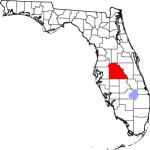
polk country florida

“This is a horrific scene,” Judd said in an article at Yahoo News. “I’ve been to a lot of murder scenes in my life, and this ranks among the worst.”

Three friends had gathered to go fish at a remote location and had been friends for years. The victims had been beaten and shot.

Describing the “quiet, quaint” community surrounded by groves, forest and cattle ranches, Judd said the area was “about as far out in the woods as you can get.”

I started writing the Deep Woods Dangers series and doing broadcasts on the topic at “Moore Outdoors” on Newstalk AM 560 KLVI and the Higher Calling podcast two years ago.

It was inspired by a question someone asked me at a seminar.

“Chester, what’s the most dangerous thing you’ve encountered in the woods?”

Without blinking I said, “people”.

This was because of dangerous encounters with people I have had fishing, hunting, and exploring in remote locations. Once I started sharing my stories, others came forth with theirs.

The idea is to let people know they should be extremely cautious in remote locations.

public domain crime
Public Domain Photo

Below area few tips from my extensive lists of preventive and defensive measures. Read the full article and list here.

#Bad Vibes: If you feel bad about going into an area don’t go. I am a follower of Christ. I believe sometimes this is the Holy Spirit telling me to stay away. You may nota I elieve that, but just call it a “gut feeling” and go with it.

#Never Alone: As much as I love to be in the distant forest alone with my camera—don’t you do it. Always bring someone along. Preferably someone who is experienced in the woods. You are far more likely to get hurt by evil people if you are alone and in the case of these three young men, even going together didn’t help.

#Pack Heat: If it’s legal where you are then use your Second Amendment right, and carry a firearm. Make sure you are trained in its use and be prepared to do what is necessary.

Better you defend yourself against a maniac than become a statistic. Also, carry a large knife with you. In close quarters it could save your life.

#Study the Area: The Internet is a great tool for studying areas. If you find out an area is a high drug trafficker area for, for example; avoid it like the plague. Stay away!

As society continues to crumble, especially in light of COVID-19 related economic problems, more things like this will likely happen. Evil runs rampant in dark times and it is my goal to prepare good people for what is going on out there.

We should not be afraid of venturing into the woods and on the water but we need to be real and realize there are very real human dangers out there.

By the grace of God and keeping a cool head, I have made it out of several situations where I likely could have been killed.

That’s why I take this so seriously.

Chester Moore

You can subscribe to this blog by entering your email address at the subscribe prompt at the top right of this page. You can contact Chester Moore by emailing chester@chestermoore.com. Subscribe to the podcast by visiting thehighercalling.podbean.com.