Tag Archives: Elk

Elk: How Did a Native Texas Animal Become an Exotic?

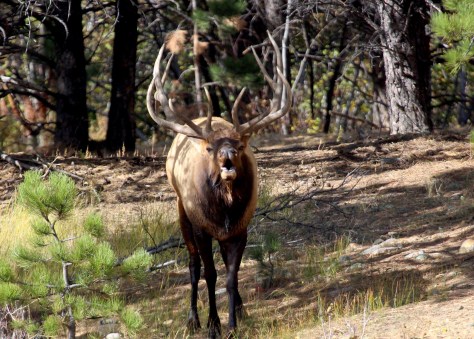
A bull elk bugling against a mountain backdrop is one of the defining images of the American West. In Texas, it is also the image of a contradiction.

Free-ranging elk roam portions of the Trans-Pecos today, yet Texas does not classify them as game animals. They are legally treated as exotics, putting them in a dramatically different management category than white-tailed deer, mule deer, pronghorn and desert bighorn sheep. Spend enough time around Texas hunters and wildlife enthusiasts and sooner or later someone will explain why.

“Elk aren’t native to Texas.”

There is a problem with that statement.

It isn’t true.

The evidence for native elk in Texas isn’t based on a single old story or someone’s interpretation of what Texas wildlife should look like. It comes from historical eyewitness accounts, archaeological remains, radiocarbon-dated elk bones, prehistoric evidence and modern genetic research. Even the Texas Parks and Wildlife Department (TPWD) acknowledges the historical presence of elk.

So how did a native Texas animal become an exotic?

That story takes us from Spanish explorers and ancient archaeological sites to free-ranging elk in the mountains of West Texas — and finally to the Texas Legislature in 1997.

Texas Parks and Wildlife Says It

Before digging into centuries-old journals or archaeological evidence, consider what TPWD currently says about elk.

On its official elk species page, the agency states:

“Historical evidence indicates that elk may have been present over much of Texas.”

TPWD further notes that by the late 1800s, records indicated elk remained in the Guadalupe Mountains of Far West Texas. The agency also acknowledges that free-ranging elk currently exist across a large portion of West Texas.

American Elk (Cervus Canadensis) from the viviparous quadrupeds of North America (1845) illustrated by John Woodhouse Audubon (1812-1862)

That alone should give pause to anyone making the blanket claim that elk aren’t native to Texas, but it is only the beginning. One of the most comprehensive examinations of the subject was conducted by Richardson B. Gill, Christopher Gill, Reeda Peel and Javier Vasquez. Their study, Are Elk Native to Texas? Historical and Archaeological Evidence for the Natural Occurrence of Elk in Texas, was published in the Journal of Big Bend Studies.

The researchers assembled evidence from history, archaeology, morphology and genetics. Their conclusion was not that elk might occasionally have wandered across the Texas line. They concluded that native elk occurred across Texas before their extirpation.

Elk on the Canadian River

The written record reaches back more than four centuries. In 1601, Spanish governor of New Mexico Don Juan de Oñate explored country northeast of Santa Fe. Along the Canadian River, his party encountered an animal that certainly didn’t sound like a whitetail.

The account described deer as large as horses traveling in herds numbering in the hundreds.

“Translation: Elk,” I wrote when I first explored this history.

That wasn’t an isolated report. In 1759, Capt. Juan Angel de Oyarzún reported elk in Texas, describing animals known as buros whose bodies and antlers were substantially larger than deer. His account even noted the use of their antlers by Comanches in making bows.

Then there was East Texas. In 1772, French Capt. Athanase de Mézières described “red deer” — the European relative of elk and terminology Europeans sometimes applied to them — in country between present-day Nacogdoches and the Sabine River.

These weren’t all reports from mountains along the New Mexico border. The researchers documented reports from the Panhandle and North Texas through Central and East Texas and into South Texas.

That matters because the old idea was not merely that Texas once had elk. A common assumption has been that native Texas elk were essentially restricted to the Guadalupe Mountains. The historical record tells a much bigger story.

Bones Don’t Tell Hunting Stories

Historical accounts can be challenged. Maybe an explorer mistranslated a word. Maybe someone saw a large deer and called it something else. Maybe an animal mentioned in an old journal wasn’t what a modern reader thinks it was.

That’s why the archaeological evidence is so important.

Gill and his colleagues documented elk bones, antlers, teeth and paleofeces from Texas archaeological and paleontological contexts. Their research includes evidence extending back into the Pleistocene.

Consider Baylor County in North Texas. An elk tibia recovered near Seymour produced a radiocarbon age with calibrated ranges including A.D. 1461-1668 and 1782-1797. In other words, there was physical evidence of elk in North Texas overlapping the era in which Europeans were beginning to document the state’s wildlife.

Another elk bone, a proximal phalange, was recovered from the Spider Knoll archaeological site in Delta County in Northeast Texas. The archaeological context was dated to roughly A.D. 970-1430.

Those locations are a long way from the Guadalupe Mountains.

The researchers also examined antler evidence and prehistoric rock art potentially depicting elk. Not every individual piece of evidence carries equal weight — some rock art interpretations, for example, necessarily involve interpretation — but taken together with the historical and archaeological record, an unmistakable picture emerges.

Elk weren’t simply animals somebody hauled into Texas on a trailer during the modern ranching era.

They were here.

What About Merriam’s Elk?

There is another wrinkle in the Texas elk story. Historically, some authorities proposed that the elk of the Southwest represented a separate form known as Merriam’s elk. That idea helped create another possible argument: Even if elk once lived in Texas, perhaps those animals were fundamentally different from the elk roaming parts of the state today.

Gill and his co-authors examined that question as well. Their study presented morphological, statistical and DNA evidence challenging the idea that the historic Texas animals represented a separate species or subspecies. They concluded that the native elk and today’s free-ranging animals belong to the same subspecies, Cervus canadensis canadensis.

Then comes perhaps the most fascinating piece of the modern story. DNA research cited by the authors indicates free-ranging elk in the Davis and Glass mountains are genetically indistinguishable from elk in New Mexico’s Lincoln National Forest. The researchers concluded that elk naturally moved south through the mountain ranges connecting New Mexico and Texas and recolonized portions of their former Trans-Pecos range.

That is something very different from an exotic animal escaping from a high-fence ranch. It is recolonization.

In my earlier story on Texas elk, I quoted the researchers’ conclusion that the evidence substantiated native elk in Texas before their extirpation and described today’s Davis and Glass Mountains animals as resulting from natural immigration out of New Mexico.

That brings us to 1997 and one of the strangest chapters in Texas wildlife history.

What Happened in 1997?

Before Sept. 1, 1997, elk did not have the same legal status throughout Texas. State law specifically regulated elk as game animals in 15 counties: Brewster, Culberson, Dallam, Deaf Smith, El Paso, Hartley, Hudspeth, Jeff Davis, Moore, Oldham, Pecos, Potter, Presidio, Reeves and Terrell.

Then came House Bill 1489 during the 75th Texas Legislature.

The legislation systematically removed elk from those provisions of the Parks and Wildlife Code. It removed references to elk from hunting-license requirements in those counties, game-breeder provisions and sections dealing with TPW Commission proclamations and permits governing the taking of elk in portions of West Texas. Most importantly, it explicitly added elk to provisions defining exotic animals.
The House subsequently passed HB 1489 by a non-record vote. The Senate approved it 31-0.

But the official legislative analysis contains something extraordinary when viewed through the lens of what we know today.

Supporters of HB 1489 did not argue that elk had never been native to Texas. The House Research Organization analysis acknowledged that elk were indigenous to Texas at some point in history.

The argument was instead that Texas probably had no endemic elk for thousands of years and that significant natural recolonization from neighboring states was unlikely. Existing elk, supporters maintained, were present because private landowners had imported and bred them. Supporters also argued that game-animal classification interfered with private-property management and landowners’ ability to benefit economically from animals they had acquired.

But the analysis also preserved an opposing argument.

Opponents argued that elk were indigenous to Texas and could reestablish themselves if suitable habitat existed. They specifically pointed to the possibility of elk migrating naturally into Texas from neighboring states and argued that elk should remain a publicly managed wildlife resource rather than be treated as exotic animals.

That argument looks particularly interesting today because subsequent genetic research concluded that free-ranging elk in the Davis and Glass mountains resulted from natural immigration from New Mexico into former Texas range.

In other words, one of the possibilities raised during the 1997 debate appears to have happened.

Native or Exotic?

There are legitimate debates to be had about elk management in Texas: How should free-ranging populations be managed? What role should private landowners play? How should naturally occurring elk be distinguished from animals brought onto high-fence ranches? What effects could expanding populations have on agriculture, habitat and other wildlife?

Those are management questions. Whether elk historically occurred naturally in Texas is a different question, and the evidence for that is overwhelming.

There are eyewitness accounts extending back to the early 1600s and archaeological elk remains from locations far removed from the Guadalupe Mountains. There is evidence spanning widely separated regions of the state, modern genetic research supporting natural recolonization of former range and TPWD’s own acknowledgment that historical evidence indicates elk may once have occurred over much of Texas.

Even the official 1997 analysis of the legislation that helped turn elk into a legal exotic acknowledged their indigenous history.

The legal classification changed.

The natural history did not.

The Mystery That Remains

I started digging into this because I kept encountering the claim that elk aren’t native to Texas. They are, and the historical and physical record makes a powerful case for saying so.

The more interesting question now is why a native animal that Texas once managed as game in portions of its historic range was removed from that system in 1997. HB 1489 tells us what happened, and the legislative record tells us some of the arguments made at the time. It does not necessarily answer every question about why the change happened or why Texas has maintained that classification as our understanding of the state’s elk history has grown.

Maybe some of those answers are still buried in old files, memories and conversations from nearly 30 years ago. For now, that part of the story can remain an open question.

But the identity of the animal itself should not.

Long before Texas had high fences, exotic-game ranches or even a Texas Parks and Wildlife Department, elk left their bones in Texas soil. Spanish explorers encountered them. Native people knew them. They ranged across a landscape far larger than the mountains along our western border.

They disappeared, and eventually, some came home.

Texas law may call the elk an exotic.

Texas history calls it a native

Chester Moore

Follow Chester Moore and Higher Calling Wildlife® on the following social media platforms

@gulfgreatwhitesharksociety on Instagram

To support the efforts of Higher Calling Wildlife® click here.

Subscribe to the Dark Outdoors podcast on all major podcasting platforms.

@thechestermoore on Instagram

Chester Moore’s YouTube.

Higher Calling Wildlife on Facebook

Email Chester at chester@chestermoore.com.

My Texas Elk Investigation Expands

A few months ago I posted a blog about elk populations expanding in Texas due to high fence population escapes.

You can read that article here where I also delve into the history of elk in Texas which is deep and complex. Despite what some say, elk are a native species.

I just confirmed an was elk killed in East Texas in May and also of another shot last hunting season.

Photo by Chester Moore

I am going to do a mini-documentary on Texas elk populations and I need your help.

I need video, photos and accounts of elk in Texas. It can be recently or in the past.

A free-ranging elk in Kendall County, TX. (Photo Courtesy Connie Powell)

There are four key areas I am looking for. They are as follows:

* East Texas: There is a small but seemingly growing population of elk in an isolated pocket of East Texas.

*Hill Country: There are elk in several areas of the Hill Country that seem to be increasing including around Rocksprings and in Kendall County.

*Trans Pecos: This is where our native herd still exists yet due to elk not being considered a game animal and there are no official surveys.

*Panhandle: I am hearing of elk roaming several areas in the Panhandle region.

You can reach me via chester@chestermoore.com with photos, videos and links to any content I might be missing out there.

The documentary will be released Oct. 3 (my birthday) and will open many people’s eyes to a truly unique wildlife story in Texas.

Gulf Great White Sharks!

Make sure and go over to our sister blog Gulf Great White Sharks at www.gulfgreatwhites.com and subscribe for lots of unique shark content.

Email me you subscribed and get one of these sweet decals.

Chester Moore

Follow Chester Moore and Higher Calling Wildlife® on the following social media platforms

To support the efforts of Higher Calling Wildlife® click here.

@thechestermoore on Instagram

Chester Moore’s YouTube.

Higher Calling Wildlife on Facebook

Email Chester at chester@chestermoore.com.

Subscribe to the Dark Outdoors and Higher Calling Wildlife podcasts on all major podcasting platforms.

East Texas Elk In History And Modernity

“Hey Chester, you’ve got to check out what I got on my game camera.”

An old Little League teammate approached me in a grocery store with a big smile on his face and an amazing photo.

A few minutes earlier, a five-by-five bull elk in velvet walked across his Moultrie Mobile Cam, which sent the picture to his phone.

“There are a fair number of elk around the lease that escaped a few years ago from a high-fenced ranch. The lease rule is we do a drawing for one bull a year and it’s a once-in-a-lifetime draw. We’re trying to manage them so their herds will increase,” he said.

That photo, along with others he showed me of other elk on the lease confirmed what I had known about this area, that had both elk and a few red stags reported over about a 10-year period.

Check out our latest episode of Higher Calling Wildlife about this topic.

Chances are these elk will all get killed. But with more conservation-minded hunters in the woods than ever, it’s possible a small population could thrive. 

I wrote a piece about this at Texas Fish & Game. You can see it here.

I recently came across an incredible study by Richardson B. Gill, Christopher Gill, Reeda Peel, and Javier Vasquez.

It goes deeply into historical accounts of elk in the Lone Star State and as the study shows, elk were not limited to theTrans Pecos.

The earliest recorded sighting of elk in Texas occurred in 1601 according to the authors. The Spanish governor of New Mexico, don Juan de Oñate, embarked on an exploration of lands to the northeast of Santa Fe.

“This river [the Canadian] is thickly covered on all sides with these cattle [bison] and with another not less wonderful, consisting of deer which are as large as large horses. They travel in droves of two and three hundred and their deformity causes one to wonder whether they are deer or some other animal.”

Translation: Elk.

In 1772, French captain Athanase de Mézières reported elk by calling them red deer (the elk’s close European cousin) between modern day Nacogodches and the Sabine River.

“This very large province can compete with the most fertile and productive. It produces in abundance beans, maize, large and small stock,buffalo, deer, red deer, wild goats, turkeys, wild hogs, partridges,hares, rabbits, and other species of both quadrupeds and birds, which has served us in this long journey for recreations as well as for sustenance.”

There are many, many more historical accounts in their study but just as fascinating is the DNA evidence they show of today’s free-ranging Texas elk origins.

“DNA research indicates that today’s free-ranging elk in the Davis and Glass mountains are the result of the natural immigration of elk from the Lincoln National Forest of New Mexico, just north of the Texas border, to recolonize areas of their former native range in the Trans-Pecos. The evidence presented substantiates the presence of native elk throughout Texas prior to their extirpation in the 20th century…”

Do you have any photos or videos of elk in Texas? If so, send them to chester@chestermoore.com.

I’m pondering making a documentary with Paul Fuzinski of Aptitude Outdoors on the topic, so anything photos or footage would be great.

Chester Moore

Follow Chester Moore and Higher Calling Wildlife® on the following social media platforms

@thechestermoore on Instagram

Chester Moore’s YouTube.

Higher Calling Wildlife on Facebook

Email Chester at chester@chestermoore.com.

Subscribe to the Dark Outdoors and Higher Calling Wildlife podcasts on all major podcasting platforms.

Amazing Wildlife Photos (From A Voice In The Wilderness Expedition)

Greetings!

I would normally say it’s great to be back after an expedition but I honestly wish I was still in stunningly beautiful Colorado.

Hey, don’t hate on me-fellow Texans! The heat index was 108 today.

We had a great time working with young people in our Wild Wishes program and other young people we are working with in a mentoring setting.

I’ll have a video recap next week but for now here are some of the photos the young people took on the trip.

Wild Wishes girl Kamille took this shot of a mule deer doe in Colorado Springs.
Our Wild Wishes girl Juno takes a great photo of a bull elk. You’ll see it in the next shot.
Juno’s elk photo turned out great!
Thirteen-year-old Delilah captured a beautiful moment between a cow moose and her young calf near Estes Park, CO.
Speaking of calves, Amber Borel got this great shot of a elk cow and calf. Many of the elk in the Estes Park area have collars to help track movements.
My daughter Faith got this great shot of a big bull elk.

We’ll be posting a video and more photos soon.

The mission fo what we do is to bring children facing special challenges to wild places and mentor them in conservation. We are teaching them to use photography to raise awarness of wildlife and the issues they face.

And we need your help as we have more expeditions planned.

Take a moment to think about your dark moments as a child and what it would’ve meant if you got to do something like this.

A tax-deductible donation of any size can be made by clicking here. You can also donate @kingdomzoo on Venmo.

We truly appreciate any size donation. Thank you for supporting what we do.

And if you know of a. young person we could help on an expedition like this or a wildlife encounter, please email chester@chestermoore.com.

Chester Moore

Follow Chester Moore and Higher Calling Wildlife® on the following social media platforms

Email Chester at chester@chestermoore.com.

Follow the Dark Outdoors podcast on all major podcasting platforms to learn about true crime in the great outdoors.

@thechestermoore on Instagram

Higher Calling Wildlife on Facebook

To subscribe to this blog and get weekly cutting edge wildlife news and commentary, enter your email at the prompt on the top right of the page

”

Wildlife Wednesday: Elk East Of The Mississippi, Rogue Waves In Bays Endanger Fishermen, Grizzly Attack & More

Greetings from the Higher Calling Wildlife® headquarters!

Did you know several states of East of the Mississippi River have thriving and growing elk herds?

Photo by Chester Moore

One state has an estimated 13,000 elk and offers some non-resident hunting opportunities.

Listen to the latest episode of Higher Calling Wildlife and learn all about elk restoration in the eastern United States. Host Chester Moore interviews the Rocky Mountain Elk Foundation’s Conservation Program Manager for the Eastern United States (Steven Dobey).

Click to listen.

In this program we discuss the following:

*Elk history in the eastern United States

*Elk translocation and restoration efforts

*Population estimates in Kentucky and hunting opportunities.

*Travel and migration issues

*Opportunities for future elk restoration

*Plus, much more.

Rogue Waves In Channels and Bays

A large segment of our readership fishes along the Gulf Coast of the United States.

And due to my own experience I have been conducting an investigation on large rogue waves produced by oil tankers and other large cargo ships.

Public Domain Photo

These can be life threatening so I am raising awareness to the issue through Texas Fish & Game as well as a future edition of the podcast.

Here’s an encounter I shared in a recent story at fishgame.com.

Reader Chris Polnick recently shared this harrowing encounter with us.

“Across from the dike quite a few years back, a buddy and I were doing some night fishing. We were out at the end of the small jetty. The waters were fairy calm. We were out there a few hours and I estimate the water line at the time to be at least three feet below the top of the jetty. All of a sudden a wave hit the jetty and the water pulled way back off the rocks and wave number was enough to splash us,” he said.

Polnick said as the water pulled even further back the second wave had just enough time to grab what we could just before the third wave washed across the top of the jetty, luckily only about mid-shin level.

“Luckily for us we were able to maintain our footing. Much higher and we would have been pushed off the jetty for sure. We lost some tackle boxes a rod and a few other items. You don’t think much about a life jacket on the jetty but we came real close to needing one that night!”

Have you ever encountered a wave like this in a bay or channel? If so, please share with me at chester@chestermoore.com. Sharing your story could help save someone’s life.

Fatal Grizzly Bear Attack

According to a report at CNN.com, a grizzly bear fatally attacked a father of four in Montana.

Sheriff Brad Bichler of the Park County Sheriff’s Office told CNN Craig Clouatre, 40, was hiking with a friend Wednesday in the Six Mile Creek area, which is about 20-25 miles north of Yellowstone National Park, when they split up.

“It is with a very heavy heart that I am writing this update. After an extensive search this morning we have located Craig,” Bichler said in a Facebook post. 

“It appears he had an encounter with a grizzly and unfortunately did not survive,” Bicher’s post said.

Grizzly numbers are rising in Montana and Wyoming and black bear numbers are increasing across much of their range. Many times these are attacks are simply people being in the wrong place at the wrong time and meeting the wrong bear.

But there are things you can do to avoid attack. Check out these bear safety tips from the National Park Service.

Persian Fallow Deer Released In Israel

Photo Courtesy Biblical Zoo-Jerusalem

We were excited to get an update from our friend Rachael Risby Raz with the Biblical Zoo in Jerusalem about the Persian fallow deer restoration project we have supported for the last eight years.

At the beginning of March, we released a large group of nine Persian Fallow deer from the breeding center at the Zoo into the wild at the Nahal Sorek Nature Reserve in the Jerusalem hills.

Three females and six males were released, and of these, seven deer were fitted with GPS tracking collars.

In the past, only the females are fitted with GPS collars. This is because the males’ necks can expand during the breeding season which means that the collars can snap and break.

This year we have acquired special elastic collars that expand when needed and thus were able to fit collars to some of the males as well.

Nadav Ganot, the Zoo’s conservation project coordinator, reports that all the deer are doing well in the acclimatization enclosure and in the coming weeks, the gates to the enclosure will be opened and the deer will be free to go into the wild. This process usually takes a few days. 

The project is in partnership with the Israel Nature and Parks Authority.

If you would like to support this project click here.

Podcast Summit

The second annual Hunt-Fish Podcast Summit kicks off Thursday at the Warren Ranch near Santa Anna, TX.

The event brings together outdoors podcasters from around the country and matches them with high-level guests from the hunting, fishing and conservation worlds.

I will be participating and can’t wait for the great fellowship and podcasting opportunities.

“Our inaugural event at the Double Draw Ranch last year was a big success,” said founder Derek York of the Impact Outdoors Podcast.

“This year it’s grown to another level and we are excited to bring together some of the top people in the outdoors world to share our common love for fishing, hunting and wildlife conservation.”

Participating Podcasters

Higher Calling Wildlife (Chester Moore)

Impact Outdoors (Derek York)

Aptitude Outdoors (Paul Fuzinski)

The Wildlife Experience Podcast (Andrew Austin)

Red Beard Outdoors Podcast (Jonathan McCormick)

Special guests for the event include Gray Thornton, President & CEO The Wild Sheep Foundation, Renee Thornton, Chair Women Hunt, Dale Rollins (Rolling Plains Quail Research Ranch), Brittany Perry, biologist for the National Wild Turkey Federation, Gale Force Twins (Emily and Amanda), Captain Stacy Lynn, Captain Eric Trout, Heroes On the Water, Laura Lindsey and Camille Null.

We will post a special updates with links to the first podcast to come from the event. All podcasters will interview the special guests and there will be special round-table discussions as well.

Follow Chester Moore and Higher Calling Wildlife® on the following social media platforms

@thechestermoore on Instagram

Higher Calling Wildlife on Facebook

To subscribe to this blog and get weekly cutting edge wildlife news and commentary, enter your email at the prompt on the top right of the page

Rocky Mountain High

There’s something about being in the mountains that cleanses the soul.

No matter what kind of baggage we bring from our day to day lives, being in the mountains brings peace.

And on the flip-side, encountering wildlife in the mountains can be the most exhiirating thing a person can experience.

As I type this from the deck of a cabin I’ll use as base camp for a few days, I’m still a bit jittery (in a good way). It’s from the adrenaline-infused meeting I had with a big bull elk and my camera.

This bull was bugling away-despite the peak of the rut being over. (Photo by Chester Moore, Jr.)

This big boy had a bunch of cows cornered in a small lake and he let a younger bull know he wasn’t getting any play.

I was told the rut was over here but you couldn’t tell by today’s action. There was bugling, attempted mating and some straight up fighting.

Seeing this from the perspective of a bowhunter, it would have been about trying to get in and make a clean, ethical shot to score on some incredible, heart-healthy venison.

But with my photographer cap on, it was about capturing the vibe of what was going on. I think I did in a couple of shots.

Elk are truly a national treasure and to see them in such numbers and to get so close was an awesome experience. I’ve seen and photographed plenty of elk in the past but there was something special about this bull.

A cow elk playing in the water near Estes Park. Co. (Photo by Chester Moore, Jr.)

He had attitude and capturing that with my camera was a true blessing.

I have never done drugs of any kind but today I got high here in the Rocky Mountains.

The bugle of the elk and the stunning scenery took me to a higher place that will undoubtedly beckon me to return again and again.

Chester Moore

You can subscribe to this blog by entering your email address at the subscribe prompt at the top right of this page. You can contact Chester Moore by emailing chester@chestermoore.com. Subscribe to the podcast by visiting thehighercalling.podbean.com.